Our people, embedded.
Continuity embeds multidisciplinary people in your organisation and points them at defined problems, not a block of billable hours. They work close to the operation, see what actually happens, and act on it. Behind every embedded person is the rest of 308 and its capability across the four domains, so a small team reaches well beyond its own headcount. This is not staff augmentation and it is not an outside advisory panel. It is our people, in your environment, answerable for the outcome.
In your organisation.
People placed inside your teams, working close to the operation rather than at a distance.
To defined objectives.
Pointed at real problems with clear measures, not open-ended time.
Backed by all of 308.
Each person draws on the full capability set across the four domains.
Four doors into the work.
Every 308 Continuity engagement works in one or more of four domains. Protect, Transform and Expand usually run as embedded work over time. React is the exception. It is fast, contained, and does not always need a long stay.
Capability, handed over.
Every engagement leaves three things behind.
Live system
Running in your environment, not a prototype in ours.
Team to run it
Your people operate it after we leave, because they built it with us.
Reasoning on record
Decisions, trade-offs and failure modes documented, so the next person understands why.
In-country, no exceptions.
Continuity holds the firmest line on resourcing. In Australia, every contributor, ours and our partners' and their subcontractors, is Australian-based without exception. Abroad, an engagement is led from Australia but built by the people of the country it serves, so allied work strengthens allied capability rather than drawing it offshore. We never place work outside a defined group of allied nations.
Continuity is the right door if
The consequence of failure is real, and someone is accountable for it.
You need capability inside the team, not a report from outside it.
The work has to run for years, not just launch.
You want the people who build it to stay and answer for it.
Work
Recent and current projects.
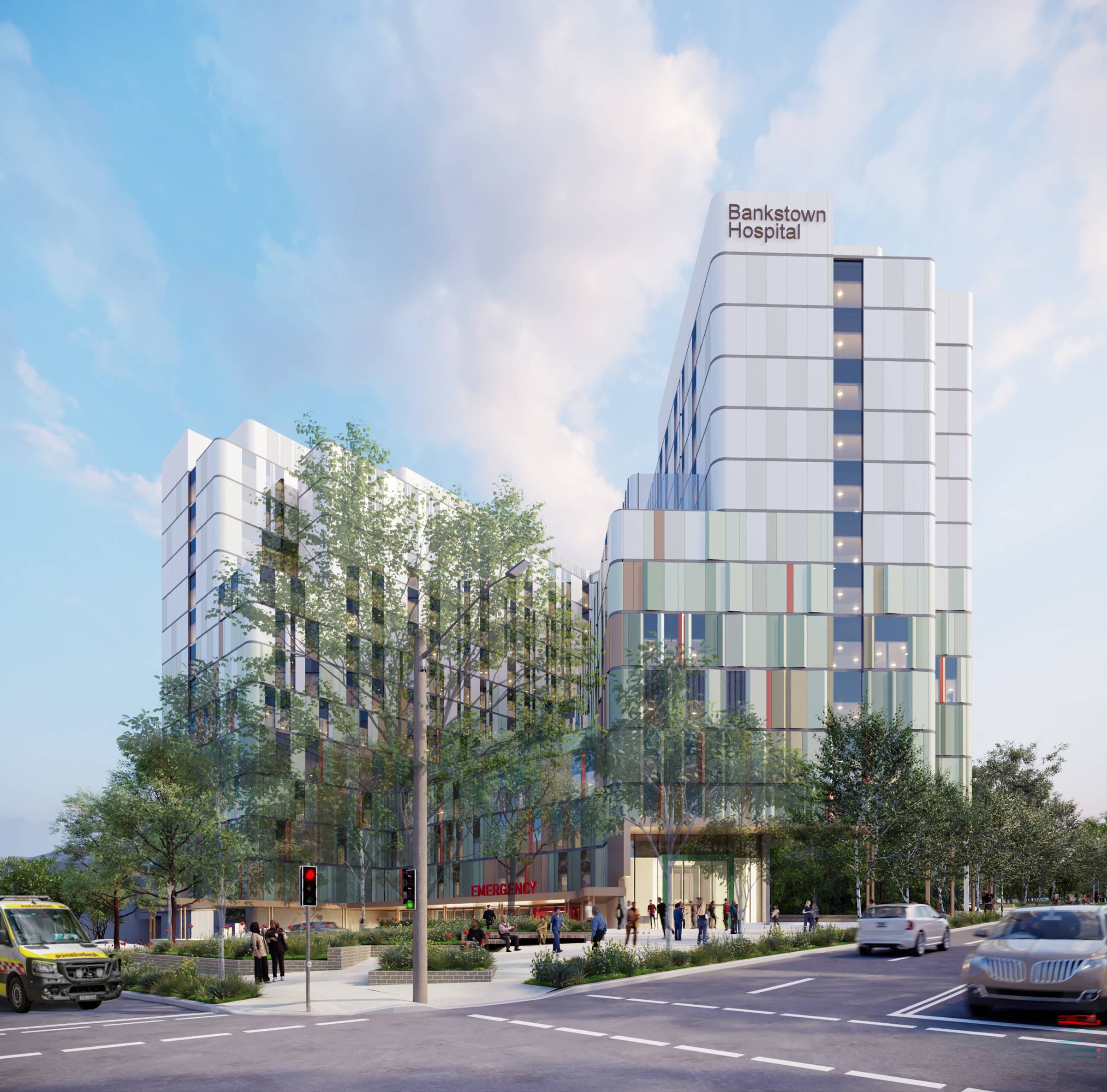
New Bankstown Hospital
A world-first Digital Twin methodology for major health infrastructure, combining quantitative and qualitative workstreams into one continuous, evidence-led operating picture across the whole programme.



Isa
Hardened, simple technology for the services that care for vulnerable people: childcare, aged care and disability support. Built to stay dependable under real pressure.